Use Real Keyboard With Garageband Ipad
- Connect Guitar To Ipad Garageband
- Use Real Keyboard With Garageband Ipad 2
- Use Midi Keyboard With Garageband
The world is your stage. This is your instrument.
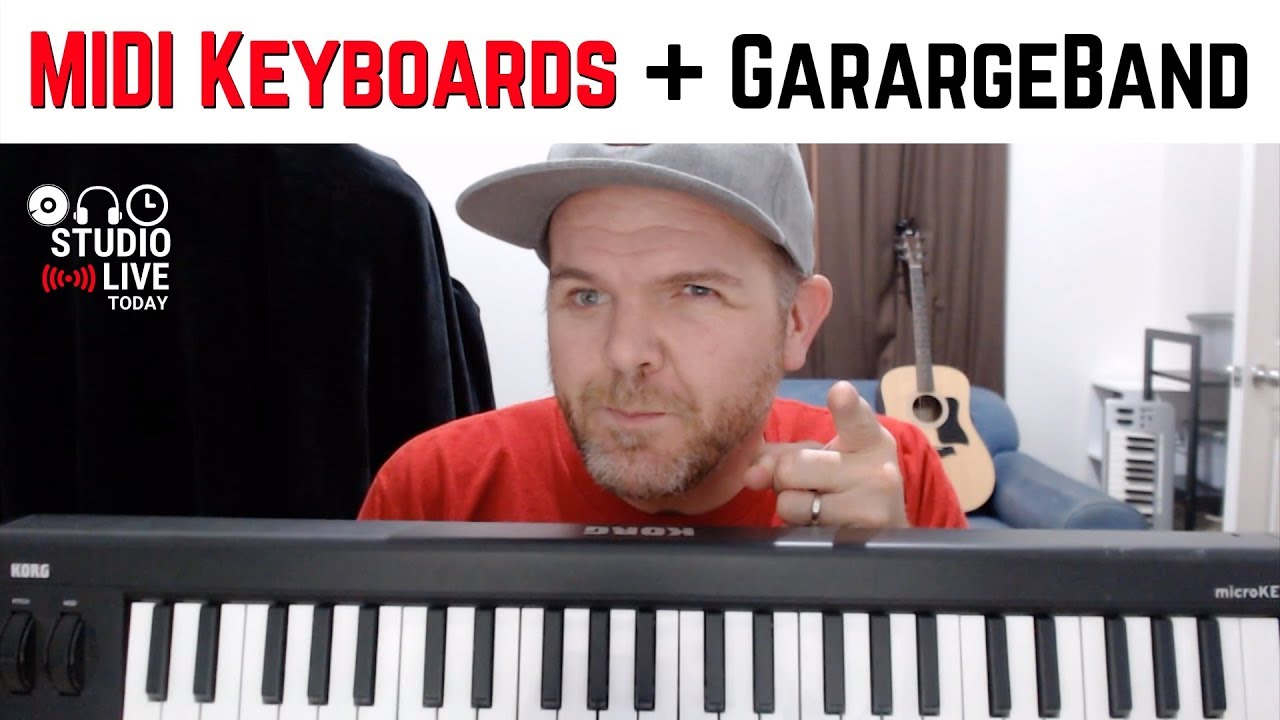
There are also MIDI connectors such as the iRig MIDI, which hook up MIDI keyboards, drum machines, drum pads, pedal boards and more to an iOS device. Connect your guitar to your iOS device (we’re using an iRig), get your headphones on and turn up the volume on your headphones and guitar. Open GarageBand. May 08, 2011 I plugged a midi keyboard with the Ipad USB item to read pictures. It works perfectly. Afterwards, I enjoyed mixing house music. How to play garageband with a Midi Keyboard on Ipad guarguale. First look: GarageBand for iPad. You can also record real instruments—I was able to use the $29. Keyboard is what you’d expect, a virtual keyboard similar to those seen in other iPad.
You can connect real instruments, such as electric keyboards and guitars to your Mac for use in GarageBand. Using real instruments with GarageBand produces not only better sound, but realistic practice, as you finger the actual instrument and not an on-screen keyboard/string set. Whether you’re a complete Garageband beginner or ready to take your projects to the next level, you’re in the right place! GarageBand on iOS and iPad OS is renowned for it’s intuitive and easy to use instruments, controls and options.
GarageBand for iOS makes it incredibly simple to play, record, and share your music, no matter where you are. Tap into a wide range of instruments from around the world. And now with the Sound Library, you can choose and download more free instrument and loop packs when new sounds are released, to help you easily craft songs in your favorite styles — all right from your iPhone, iPad, or iPod touch.
Download GarageBand for iOSPlay Make music. With or without an instrument.
The moment you launch GarageBand, you can start making music. Play stunningly realistic Touch Instruments, instantly build big beats, and create music like a DJ — all with just a few taps. The all-new Sound Library lets you explore and download sound packs tailored to help you build your tracks with just the right elements for the style you want.
Live Loops makes it fun and easy to create electronic music. Simply tap cells and columns in the grid to trigger musical loops, and then build your own original arrangements. You can even use Remix FX to add creative, DJ‑style transitions with Multi‑Touch gestures, or just by moving your iOS device.
If you can tap, you can play.
GarageBand comes with beautiful and highly expressive Touch Instruments that sound and respond just like the real thing. Play keyboards, guitars, and bass, as well as sounds designed for EDM and Hip Hop. Smart Instruments make you sound like a pro — even if you’ve never played a note. And now you can explore the sounds of Asia with traditional Chinese and Japanese instruments, including the Guzheng, the Koto, and an array of Taiko drums.
When it comes to how you make your beats, the choice is yours — from jamming live on virtual drum kits to instant drag‑and‑done Smart Drums. The all‑new Beat Sequencer lets you easily build rhythms using sounds and a workflow inspired by classic drum machines. And Drummer gives you access to a team of virtual session drummers, each playing a popular electronic or acoustic style with a signature kit.
Plug it in. Tear it up.
Plug in your guitar and choose from a van‑load of amps and stompbox effects that deliver the perfect feel — from dreamy soundscapes to stadium‑size rock.1 Our bass amps let you hold down the bass line with clean or distorted rigs modeled after vintage and modern amplifiers.
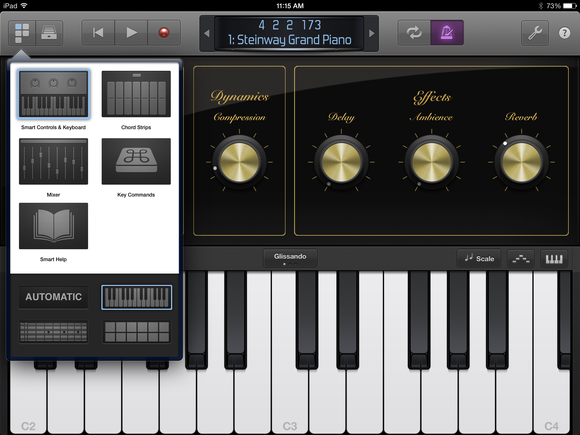
GarageBand includes Alchemy, one of the world’s most advanced synthesizers. Explore hundreds of Apple‑designed Patches, perfect for EDM, Hip Hop, Indie, Rock, and Pop music. Use the expressive Transform Pad to morph between sounds in real time, or just have fun using the simple Chord Strips that help anyone play like an expert.
Sound Library. Your all‑access pass to a world of sounds.
With the new Sound Library, you’ve got instant access to an incredible and expanding collection of free loops and instruments from right inside the app. Explore and download Apple‑designed sound packs that include Touch Instruments, Apple Loops, Live Loops templates, and instrument presets that will help you produce tracks in a wide variety of genres and styles. You can easily manage your library as it grows, and GarageBand will even notify you when new sound packs are released and ready for you to download.
Record A full recording studio. To go.
With its powerful and intuitive interface, GarageBand makes it easy to capture, adjust, and mix your performances into a finished composition. Build a complete song using any combination of Touch Instruments, audio recordings, and loops.
Work with up to an astounding 32 tracks with GarageBand for iOS.2 With a compatible third‑party audio interface, you can even plug in the entire band and record everyone simultaneously on separate tracks. Take multiple passes to nail your performance using Multi‑Take Recording — just choose any Touch Instrument, tap Record, and play continuously over a looping song section. GarageBand automatically captures each one, and you simply choose your favorite.
Fine‑tune your tracks and record each tap, swipe, and twist of the knobs. Draw and edit volume automation for precise control over your mix. And let the Simple EQ and Compressor keep your tracks sounding crisp and clear. For even more detailed control, take advantage of 10 track‑mixing effects directly from Logic Pro, like the Visual EQ, Bitcrusher, Vocal Transformer, and more.
Audio Unit Extensions let you use your favorite compatible third‑party instrument and effect plug‑ins right in your GarageBand song. Browse the App Store and download your selections from leading music app developers like Moog Music.
iCloud GarageBand everywhere. Tweak your tracks. On any device.
iCloud allows you to keep your GarageBand sessions up to date across all your iOS devices. Using iCloud Drive, you can import song sketches to your Mac and take them even further, then share your finished piece on any of your devices. You can also import a portable version of a Logic Pro X project and add more tracks. When you bring the project back into Logic Pro, the original tracks are all there, along with the new ones you’ve added in GarageBand.
GarageBand for Mac
Your personal music creation studio.
GarageBand for iOS
Play, record, arrange, and mix — wherever you go.
Music Memos
An app to capture your song ideas. Whenever inspiration strikes.
OK, so technically everything you do on your iPhone or iPad is “virtual” —because you aren’t using any physical hardware beyond the iOS device, the software does everything in the virtual realm. And MIDI isn’t really “real,” because it’s just the messages that devices exchange to control which events take place and when they occur.
But Virtual MIDI uses CoreMIDI that basically allows synthesizers, drum machines, and sequencers to communicate with each other without needing another app to do all of the work. All you need are the apps that work together.
How apps use Virtual MIDI depends on the imagination and resourcefulness of the developers who make the app. It all depends on what features they implement.
Linking apps
Let’s pair up a drum machine and a synth to handle the bass line for some backing tracks. Both Funkbox and Thor offers some solid Virtual MIDI integration, so this example shows you how to take those apps and make Virtual MIDI magic happen.
Connect Guitar To Ipad Garageband
First, open up the Thor app and select a good bass preset. Tap the keyboard and see if you like the sound — tweak the controls until you’ve got something you’re good with.
Now, open the Funkbox app and tap the Settings button. If the MIDI switch isn’t already in the On position, make sure you switch it over.
For now, leave all of the settings as they are, unless the Bass MIDI Sequence button is off. Make sure you tap that button and the red light next to that button comes on.
Next, tap the MIDI Routing tab.
Notice how Thor shows up under the CoreMIDI Outputs section. In this case, Virtual MIDI uses CoreMIDI to transmit the MIDI messages.
Navigate back to the Thor app and tap the gear icon. Select the Source button under the MIDI heading and choose Funkbox from the listed options.
All of the steps basically put Thor at the command of Funkbox, with the synth accepting note (the pitch of the note) and gate (when the note actually plays) commands from the drum machine.
Go back to the Funkbox app and tap Start/Stop to hear the results. You should hear a funky drum loop backed by a bass line coming from the Thor app. The programmed beat from Funkbox determines the notes played by Thor, and Funkbox doesn’t really provide a full-featured interface for actual notes. Instead, Thor receives the notes that match up with the notes used to trigger the Funkbox notes. It doesn’t sound bad, but it doesn’t give you the control you might want. /omnisphere-2-steam-folder-location-mac.html.
Adding a sequencer
A MIDI sequencer acts as the master control for all apps that accept incoming MIDI signals. Basically, the sequencer manages the song and passes along commands to all the apps listening for those commands.
The advantage of using a MIDI sequencer involves sending standard commands to all the apps and triggering them from a single source, rather than trying to decide which app controls the others and how. Every parameter about the song originates from the sequencer, and you can make any adjustment necessary from that location.
For this example, you’ll see a fairly full-featured MIDI sequencer called Genome. You can find other MIDI sequencers in the App Store, tailored both to live performance and to programmed sequences. Genome falls into the latter category, and it’s used here for a couple of reasons:
The aforementioned fairly full functionality of MIDI controls, including the ability to lay out loops and patterns
A good linear, visual representation of the MIDI sequence
A track-based representation of the 16 available MIDI channels
MIDI transmits information on 16 channels — no more, no less. The MIDI specification allows for 16 channels as a standard, so you can count on that no matter which MIDI sequencer or app you use. So with our Thor and Funkbox apps already open, open Genome.
First, let’s set up a pattern for Funkbox on MIDI channel 10. Why channel 10? The MIDI standard for drums and associated percussion uses channel 10. You could use other channels, but more than likely, any drum app or external drum machine you use will accept MIDI commands on channel 10.
On track 10 in Genome, tap the plus sign to add a pattern for that channel. Then tap the pencil icon for channel 10.
You can tap on each square to play a drum or percussion hit. In this case, C3 triggers the bass drum, D3 triggers the snare drum, and F#3 triggers a closed hi-hat sound. Tap a quick pattern out for a standard rock beat or just input whatever you want.
The pattern entered commands any app listening for instructions on MIDI channel 10 to play those notes at the specified time. Tap Back to go to the main Genome sequence screen, then tap the pattern to activate it. Now, let’s move on to a bass line.
Use Real Keyboard With Garageband Ipad 2
Move over to the Thor app and tap the gear icon. In this case, tap Source and set it to Genome. Then tap the plus icon under Source until it says channel 1. If you haven’t tired your fingers out yet, go back to Genome and tap the plus sign for channel 1. Here’s a simple bass line to go along with the extremely simple drum pattern.
Go back to the main sequence screen in Genome and tap the pattern in channel 1 to activate that pattern. Then hit the play button in the upper-left corner to hear the final product.
You may hear the pattern coming from Funkbox in addition to the drum hits you programmed in Genome. Turn down the master fader (labeled MST) to take the programmed pattern out of the sound produced by Funkbox.
Use Midi Keyboard With Garageband
Okay, so the example is pretty basic. The magic from here involves the additional patterns you can program. Just keep tapping the plus sign and adding new patterns.