Virtual Dj Organize Music
60571
Apr 03, 2013 A well organised music library can make your digital files come to life, make your DJ sets more fun to play and richer in content, and become a positive joy to use. But how do you get started, especially when you already have thousands of tracks? Nov 16, 2016 Only admit to your DJ library the tunes you actually know you’ll want to DJ with – and purge it of anything else; the rest of your music doesn’t belong there. Make sure your files contain the metadata that’s important to you – as a minimum artist, title, any remix title, year, and genre. Jul 21, 2016 Submit Newbie Questions. Submit a Meme. Submit a Mix. Submit Pics of Your Setup. Submit General DJ Post. Welcome to /r/DJs /r/DJs is a subreddit for general DJ discussion: equipment, techniques, news, music, etc. If you are new and are interested in learning how to DJ please check out this thread first. There is also an entire subreddit /r/Beatmatch dedicated to helping new DJs learn. DJ or Disk Jockey is a person that mixes various sounds and also occasionally add his audio with the playing music. With the help of these virtual Dj software, anyone can learn about audio mixing without spending a penny. For beginners, these software are really useful as they can learn, play, and mix music to gain experience.
Today’s post is inspired by Digital DJ Tips member Jason Nappier, who writes: “I’d like more insight about programming and organisation. I have a ton of music, but it is all dumped on my hard drive. When I used CDs and even back in my vinyl days, I knew where everything was, so if I needed an idea, I would just flip through and something would jump out at me quickly. Without that organisation, I find myself blanking and scrolling through mountains of junk before seeing a song that fits with where I’m going, which causes a lot of stress and a disjointed performance. Can you help?”
It’s an extremely common problem, and one I battled with personally for many years as I converted to digital. Especially for DJs used to vinyl and CDs, coming to digital – where there’s just a whole list of files in a browser – can take the soul out of owning music. It can lead, as he says, to “blanking and scrolling”, when you should be intimately interacting with your beloved music, tunes just jumping out at you as you play.
I have tried all types of music organisation techniques over the years, and realised that there are some principles that – however you decide to do it – can make the daunting task seem less so, and ultimately move you beyond vinyl and CD systems into having a digital music organisation system that works great. So here are some time-trusted techniques for taming a digital music collection, with special emphasis on helping DJs coming from a vinyl or CD background.
My 7 killer tips
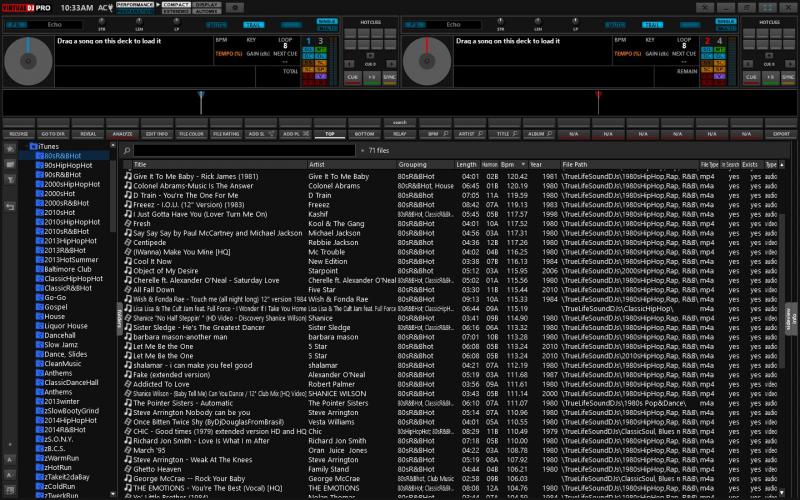
- Use a separate program to organise your music – Your DJ program is simply your “DJ booth”. It’s where you perform from. When it comes to organising your music, use something else. For most people it is iTunes, because the work you do in there shows in your DJ software seamlessly. iTunes is your shelves of vinyl or your racks of CDs, organised how you choose
- Pack a “crate” for every gig – CD and vinyl DJs never take their whole collection to a gig with them. You shouldn’t either. Instead, “pack” a playlist full of about twice the number of tunes you think you’ll need for any given event. Put your soul into choosing those tunes. Spend hours doing it, and be strict and only play from that playlist or folder within your DJ software at your event (whether that event is a new mixtape, a web radio show, or a “real” gig). This will force you to think harder about your music choices ahead of time, and stop the blanking and scrolling syndrome you speak of
- Have less music – Your collection is almost definitely too big. What happens with vinyl is you have a go-to “area” of your collection and whole “no go” zones of stuff you rarely look at. With digital, everything tends to get lumped together. Worse, you tend to collect much more as digital files are cheaper and take up less (no) room. But it’s a trap. A lean, mean music collection keeps you focused on quality, so regularly prune stuff out. If you haven’t played it for a year, or ever (there’s a column to show you that), strongly consider deleting it or moving it to a “never played” folder or backup hard drive, and out of your main searchable library completely. Oh, and keep all non-DJing music out of iTunes entirely. Figure out another place for that stuff
- Add cover art to your tunes – Especially for tunes you used to own on vinyl or CD, adding the correct cover art (and by correct, I mean the art you remember from your old physical copies) can give you a great visual aid and let you “flick through” your music in the same way you were used to back in the day. It’s easy to use Google Images to find the cover art you’re used to, and takes seconds in iTunes to then add or replace the picture associated with each music file to make it the one you want
- Use digital’s sort features to your advantage – With physical vinyl or CDs, you used to have to have a sorting system and stick with it (alphabetical, by genre, by date purchased etc.) With digital, you can use all of these and more. You can sort by genre, BPM, date of release, date added, alphabetically by artist, alphabetically by title, even by key. So do it! As you’re planning your sets and packing your crates for gigs, use all the sort tools to slice and dice your music and reduce it to more meaningful “chunks” than one big collection. By using smart playlists in iTunes, you can get even more granular (“everything from 1988 to 1992 marked house and techno”). Oh, speaking of genres…
- Be bold with genre names – It’s tempting to leave the “genre” name as it was when you bought a music file, but that’s nonsense. If you play house and house only, having every track marked “house” is not going to help you sort your music. But if you’re a mobile DJ who plays everything from country to EDM to rock, having big categories such as, well, “country’, “EDM” and “rock” may be far more useful than “deep house”, “UK garage”, etc. Point is, you need to choose the six to 10 categories that make sense to you and replace the “genre” information in your files with one of those, for every song. When you sort or filter by genre, the tracks you’ve associated with each other should “feel” like a coherent set of music to you, something you could make a strong mixtape or DJ set from
- Use the comments field to your advantage – DJs used to put stickers on their tunes “back in the day” with info like key, BPM etc. Of course, that info can now be displayed digitally for you, but you can use the “comments” field in iTunes and your DJ software to add other useful info for memory association among songs and to make tunes more searchable. I like to use “MWW” followed by the name of another tune in a tune’s comments field to mean “mixes well with”: It jogs my memory for a great next tune when I am playing a tune I’ve tagged this way, and you can add such tags while you’re out DJing so you don’t forget a great mix
Finally…
When you start thinking about your files, folders and playlists the same way vinyl and CD DJs think about their physical collections, you reap the benefits of digital and negate the drawbacks. Soon you move way past what vinyl and CD DJs can do, realising that things like the history features in your DJ software (that show you what you’ve played at your gigs), and the awesome sorting, filtering and smart play listing functions in iTunes, move how you can interact with your music way beyond physical media.
My final tip is simply to ensure that when you’re in iTunes sorting your music, improving your tagging, adding artwork etc, make sure you always have something playing! Above all of this, just listening to your music is the most important thing of all. Don’t sit in a silent room re-tagging all your music for hours on end – it kind of defeats the object of this, which is of course to get to know your music better so you can play better DJ sets with it.
Did you struggle with digital music in your move from digital to vinyl? How did you get around the issues? Please share your thoughts in the comments.
you may also like
21800
In 5 Reasons To Organise Your Music Properly, you learned the importance of organising your music library. But where do you start with such a task? Well, your approach should be determined by your immediate and future needs as a DJ, as well as the amount of time and effort you are willing to invest. But first, it pays to know which type of collector you are. Most of us fall into one of the following groups when it comes to the relationship with our music collection. Which are you?
The three types of music collector
1. The “new” collector
You were born in the internet era where the thought of physical media is archaic and all your music is gathered or accessed online. You have a small local collection of tracks but rely more on streaming music rather than downloading.
You realise that streaming music currently has its limitations for DJing so you’re keen to organise and grow your library pretty much from scratch. You’re welcome to new ideas and to trying methods out so you can find the one that works for you – it’s easier to get it right now and build on it as you develop, right?
2. The “passive” collector
You remember CDs and vinyl records as the “original” DJ media and may still use them from time to time. You have built up a varied collection of music that includes physical and digital media, but your purchases have been sporadic and isolated. You welcome the transition to digital-only DJing and music listening, and use streaming as an alternative to listening to your collection, or to support your acquisition choices. You’re buying duplicates of your favourite physical media just because it’s easier than converting them!
Your digital collection has reached a point where you’re losing touch with music you bought a few years ago because it’s got lost in the few thousand tracks you have. When you try to DJ with your collection, you stick with the most recent purchases because you know where they are, and you occasionally miss the tracks that were important to you when you initially had the desire to DJ. Your library needs organising and structure, but you don’t know what to tackle first.
3. The “active” collector
You have always loved music and it’s almost become an addiction to have the latest track and constantly refresh your musical taste as a listener or DJ. You’re pretty sure you know your music well, and although your collection is mostly made up of digital media, you’ve spent time converting some of it from physical sources.
You’ve always recognised the need to have your collection organised and you already have a system in place – but if you’re honest, over time it’s got unwieldly due to changes and inconsistencies in your approach. Omnisphere 2. 4 software update crack. You stream music primarily to research new tracks before downloading them into your personal collection. You may also choose to separate your library into DJ and non-DJ music based on your preference or needs.
First steps in organising your music
It’s natural to move from one group to the next. But regardless of the group you are currently in, one rule can be applied to organising your library:
Start as you mean to go on!
It sounds simple enough but it’s easy to get lost in the bigger picture of your whole music library. You understand the desired end state of your entire library as being this wonderful free-flowing, search-friendly, auto-playlist generating, dynamic music revival machine, but you forget that in order to get to that state you must start somewhere!
There is no magical “one button” solution to reorganising your library, because in most cases it has grown organically, as that’s the way you’ve added to your collection.
Starting with baby steps
But unless you fall into the first group, or you can afford to scrap your collection and start again, or you are willing to invest the time in “artificially” starting again, you will instead need to make small but defined steps to reorganising your library. It will still take time but the rewards will be more immediate and useful. So where exactly do you start?
At the beginning of this article I stated that your approach depends on your “immediate and future needs as a DJ”. But do you know what your musical needs are? “Yes” you might say, but when you break it down you’ll start to see why you should prioritise those needs. Take today, for example. What are you listening to while you read this? (Nothing? come on, rule #1 for a DJ – always have music playing… 😉 ) What are you expecting to listen to later today?
Maybe you’ve chosen a playlist that includes new or recently added tracks to your collection. There may be some tracks that you haven’t got round to listening to yet. There may also be tracks that are on your current DJ playlist, those you’ve been using in your sets for the past couple of weeks and that you expect to use for the next month or two. Your immediate need is therefore to organise the tracks that you’re listening to now, or will need access to in the very near future. So this is where you start!
You cannot predict all of this but a large proportion of your current musical usage will be “known”, so start organising here, whether you have 200 or 20,000 tracks in your collection. Once you’ve made a start, the ongoing process of reorganising can be incorporated into your workflow alongside dedicated clean-up sessions that can be focused on particular groups of tracks, import dates, genres, release years, artists, albums etc.
Next time:
So that’s the big idea. We’ll look into choosing the right file format for your music library in the next article.
Check out the other parts in this series:
- Choosing The Right File Formats For Your Music Library – Part 3
Tell us which type of DJ you are in the comments. What’s the biggest issue you have with organising your music collection? Again, please let us know so we can make the forthcoming articles as useful as possible for you.
Virtual Dj Organize Music App